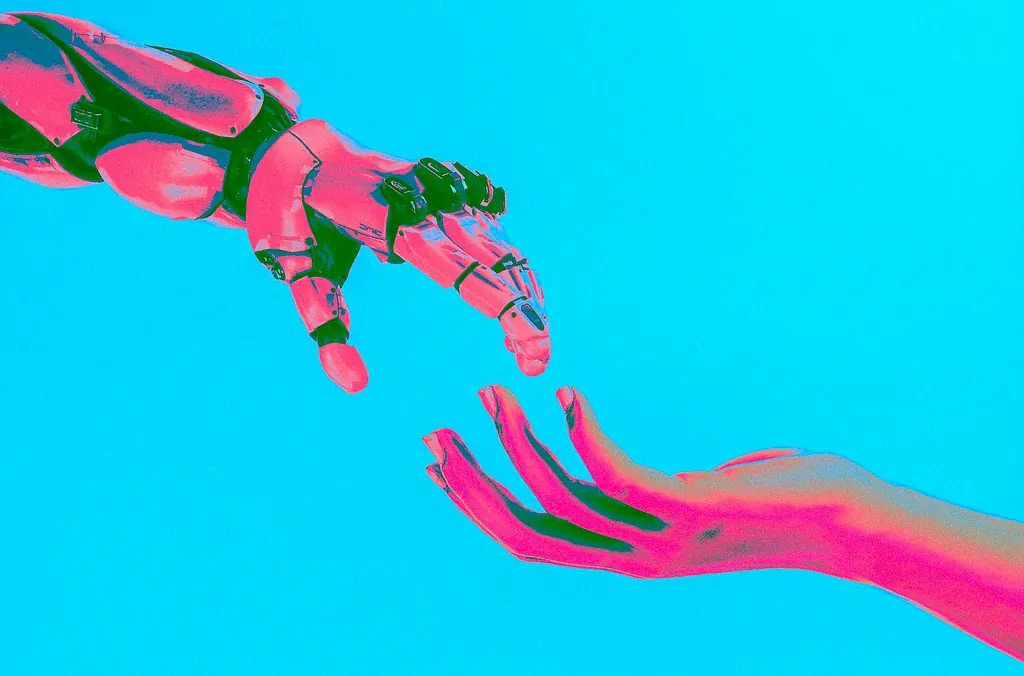
With the announcement of Google’s Agent Development Kit, the concept of “agents” in artificial intelligence has come to the fore again. Software and hardware systems that researchers have dreamed of, perceived, thought and activated since the earliest days — on the verge of a new era. In this article, we will briefly review the first and second wave and discuss what the third wave makes it different, application examples and basic perspectives on the future.
First Wave
From Monoliths To Microcommunities
In the 1980s and ’90s, pioneers such as Marvin Minsky and Rodney Brooks challenged the “big brain” artificial intelligence. The two approaches to the designs of Minsky and Brooks’ artificial intelligence agents are the “how do we think?” It offers very different answers to the question. Minsky’s Society of Mind described intelligence as the joint work of many simple, interacting sub-agents, while Brooks advocated embodied agents who learn through real-world interactions.

According to Minsky, the mind is a community of people who work with many subagents, each of which performs a simple task or rule, rather than a single great “visible intelligence”. These subthinkers are specialized modules for functions such as direct sensing, classification, memory access, planning. Intelligence is born from the interaction network of these modules.
In Brooks’s opinion, he argued that abstract intrinsic models (world representations) make artificial agents slow and fragile. Instead, fast, reactive and simple behavior layers are needed directly through sense-act cycles, that is, a physical body, sensors and actuators are needed for intelligence to form. The agent could only learn by interacting with the real world.
During this period, FIPA ACL and KQML messaging protocols, RDF/OWL information models and frameworks such as JADE and NetLogo came to life; however, artificial intelligence could not fully penetrate mainstream software. The rise of smartphones and social media in the 2000s distracted the industry and the process of artificial intelligence waiting on the backstage began.
What Triggered the Second Wave?
Artificial intelligence has experienced ups and downs over the years, the basic theory was many artificial intelligence methods and methodologies launched in the 1970s, these projects, many of which needed high resources to come to life, appeared mathematically or as small demos for a long time; but when the computational power, the abundance of data, the breakthroughs in deep learning and the interest of the market came together in the last decade, suddenly a huge explosion (AI Hype) occurred. In other words, the studies have not come in the last 5 years and have not even stopped at all for 50 years; only today’s successes have come true as if the nation is to wake up from a relatively “sleep” thanks to the maturation of both technological and economic conditions. And that’s exactly where the second wave started.

As of 2017, with the application of Transformer-based models in the field of language, the models we know closely today (such as BERT, GPT) have made a breakthrough in the field of natural language processing. Thanks to the mechanism called self-attention mechanism, transformer-based models allow long-range connections to directly model distant relationships by “paying attention” to each word whole sentence. Since each word was assigned different points of importance according to context, much more flexible and contextual representations emerged and the foundation of models such as GPT was laid.
APIs of services such as OpenAI and Hugging Face, transformer-based model development infrastructure enabled companies to immediately integrate powerful models with a few lines of code.
This integration resulted in productive applications. Content writing, code production, visual creation models (DALL·E, Stable Diffusion) entered daily life quickly. And within a few years, it made a quick entry into our lives.
Imagine, if we take the research preview of ChatGPT on November 30, 2022, as the first event we can see as the second wave, it will not be difficult to see the era of artificial intelligence bypass in the period until April 2025.
So where will this go?
Third Wave: Dawn of Agents
An artificial intelligence agent is a software or hardware system that detects its surroundings (sensor / input) and takes action according to these perceptions (actuator / output) and is designed to achieve a specific goal.

The third wave is shaped by the intersection of the concept of “agent” with modern LLMs, microservice architectures and cloud infrastructures. There are 4 basic features that an “agent” should have. These are:
- Perceptors: Data to be collected from the environment (e.g. cameras, microphones, APIs).
- State: It processes the collected data in the internal model and creates a “snap photo” about the environment.
- Decision Maker: Determines how to achieve the goal; varies from simple rules to complex optimization algorithms.
- Impressives (Actuators): Performs actions as a result of decision (e.g. robot arm movement, sending messages, writing to database)
Thanks to big data, artificial intelligence agents have a kind of sensors. I’m not even talking about instant audio and images in solutions like Apple Intelligence, ChatGPT’s ability to review camera data or anything.
GPT-style intellectual models give a real “brain” to the structures called agents with their ability to plan, summarize and make inferences, and create decision-making mechanisms.
Libraries such as LangChain, Microsoft AutoGen, and Google Vertex AI Agent Builder combine LLMs with web browsers, databases and even robotic APIs, enabling agents to detect and take action.
Kubernetes, serverless functions and event-driven architectures allow agents to stand up on demand, share according to the situation, and scale flexibly; enabling creating micro-agent clouds.
Protocols such as the Model Context Protocol (MCP) and Google’s A2A specification promise interoperability across agent platforms, resembling the FIPA ACL efforts in the first wave.
These also shape the present day of artificial intelligence agents.
Beyond Chatbots: Wild Agents
Artificial intelligence, which found a body by entering our lives with chatbots, has entered our private and business life in many subjects these days. And in less than a year, they have been involved in our lives in many areas, now they undertake much more complex tasks. I can’t go without mentioning the most important ones that come to my mind.
- Corporate Workflow Orchestration
Agents that coordinate fragmented systems such as CRM updates, financial reconciliations, and supply chain logistics are replacing manual hand swaps with automated pipelines. These structures, which many companies have acquired, not only reduce human needs and increase employee productivity. - Internet of Things (IoT) and Collaboration at the End
In intelligent manufacturing, micro-agents in end devices negotiate resource use, restructure production lines and pre-mark maintenance requirements. We can see this end-to-end cooperation, not only in large production lines in factories, but even in personal use. This end-to-end cooperation, which has entered our lives in wide spaces from household items to cars, allows you to pull and turn your home, park your car and even bring it to your feet with commands connected to a phone at our fingertips. - Personal Productivity Aids
Artificial intelligence agents, especially involved in our daily lives with tools such as Apple Intelligence, have turned into the next generation of “digital servants” who scan and filter your inbox, schedule proactive meetings taking into account your time zones, preferences and travel restrictions, or help you with complex documents from the draft stage to the final version.
Perspectives on the Age of Agenic Artificial Intelligence
It is worth noting that artificial intelligence agents have a lot of gray space, unlike any system. AI agents need to take action, interact with other pieces of software or other devices, or even you, interpret the user’s environment and context — in short, it needs to be built-in, autonomous, intelligent, social. So what kind of topics do these make me think?
1. Governance and Ethics
- Auditability: As business transfers critical decisions to agents, “explainable agent” logs — a kind of audit traces — will be needed.
- Accountability: Clear legal frameworks and insurance models will be essential. Who is responsible when an agent makes a costly mistake? To developers, platform providers, or end users? Although there is no legal regulation to answer such questions, although there has been the internet in our lives for 40 years, it is a great mystery how to cover the potential losses of artificial intelligence errors while even the policy of insurance against cybercrimes has just begun to develop.
- Alignment: Agents can exhibit “instrumental convergence” behaviors that manipulate the metric while optimizing narrow KPIs (key performance indicator). It seems that definitions should be quite objective to prevent the metric from being manipulated, and in many ways it cannot be guided without solid ethical restrictions and human-regulated processes.
2. Safety and Robustness
- Adversarial Attacks: When we talk about cyber security, cyber attacks against artificial intelligence, or rather, do not happen without “artificial social engineering attacks”. Agents who interpret screens or web forms can be fooled by carefully prepared inputs. It is essential to ensure the integrity of hardening and detection channels against hostile examples.
- Supply Chain Risks: Many agent platforms are based on third-party LLM APIs and open source modules. We believe that the origin of these components will provide protection against backdoor or malicious updates.
- Insulation etc. Collaboration: While sandboxing agents avoids excessive access, over-isolation prevents collaboration. Finely controlled capability models borrowed from operating system security can strike balance.
3. Decentralization and Running on the End
- Federative Agents: Rather than a single cloud brain, agents can cooperate federatively between devices, sharing learned weight or policy fragments without centralizing sensitive data.
- Low Energy Consumption End Agents: Small “nano-agents” embedded in sensors or wearable devices can make local inferences only by consulting powerful cloud agents when needed. However, this situation also raises the question of the safety of extreme agents.
4. Human-Agent Cooperation
- Complementary Forces: While agents excel in pattern recognition and repetitive work, people are still one step ahead in common sense, empathy, and strategic judgment. Designing fluid task transitions between people and agents will be the key to successful applications.
- Trust Calibration: Excessive trust in an autonomous agent prevents uncontrolled errors, and incomplete trust prevents adoption. Adaptive transparency, which reveals logic when uncertainty is high, helps adjust user trust.
Conclusion
Artificial intelligence agents won’t help us develop better chatbots. Artificial intelligence agents should not lead to artificial intelligence hallucinations (the hallucination I am talking about here is not what AI sees itself, but what we see about it :) ) There is still a long way to go, it will not bring us the noble artificial intelligences we call general artificial intelligence. His steps are already walking from one branch. Maybe I’ll talk about it in a future article.
But artificial intelligence agents are even bringing beyond bringing and bringing in a corporate software revolution where many tasks are automated to an unimaginable extent.
Ready or not, we are on the third wave. Now it’s time to sink or surf by holding our hand fast.