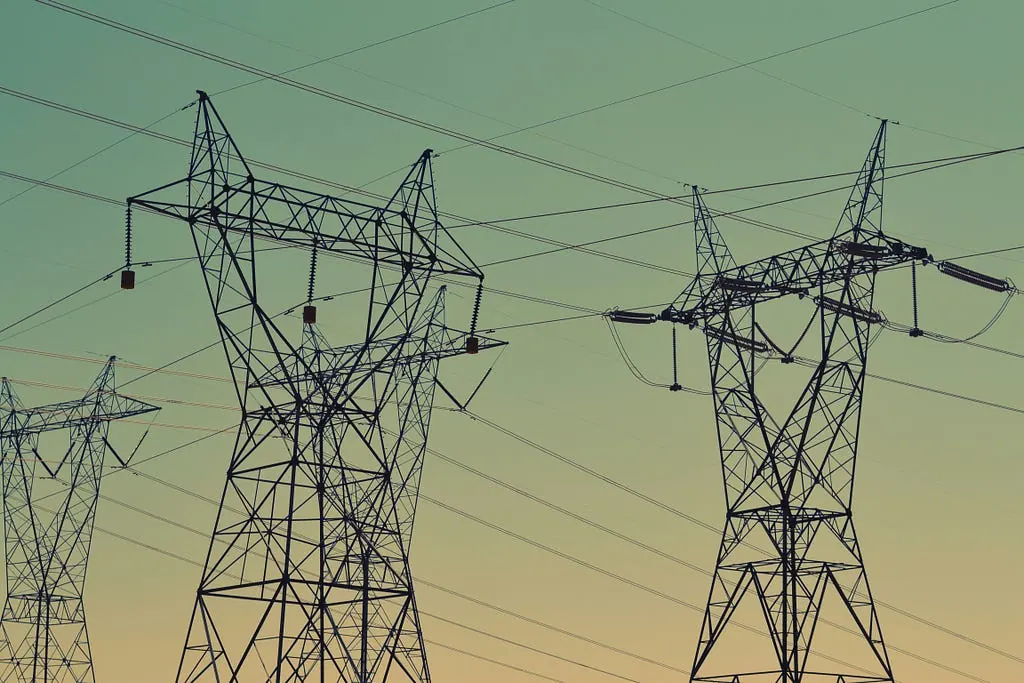
April 28, 2025, Monday. A dark silence engulfed the Iberian Peninsula. Within seconds, there was a power outage in a wide area from the Iberian Peninsula to the whole of Spain and Portugal. Although it was reported that the power outage appeared in other European regions in the following hours, Spain was most affected by this crisis.
Electric transport has completely stopped; people stranded on the subway line, customs-running generators to provide energy to hospitals and places with critical energy needs in public spaces, collapsed communication infrastructure… Moreover, there is still a risk that this power outage will continue to affect the whole of Europe.
So what happened, what is the root of the biggest electricity crisis Europe has faced in the last 50 years?
Anatomy of Crisis
The power outage that started in Spain around 12.33 was due to a series of mishaps. The main claim is thought to have been an electrical balance disruption due to the sudden disconnection of the energy transmission lines between France and Spain, or causing them to break. So much so that it is known that 60% of the energy that meets the immediate need on the system is lost for 5 seconds and there is an energy loss that creates a domino effect on the electrical infrastructure.
The first conclusion about this deterioration is that the incident is not caused by the sudden break of the transmission lines between France and Spain, but due to “atmospheric phenomena that are not encountered, but by a series of events that result in interruptions in transmission lines due to “not common atmospheric phenomena”. It is thought that the intraday temperature difference, which is 30 degrees at this time of the year, causes a phenomenon called “induced atmospheric vibration” on high voltage lines, which can be explained as a change in the parameters of the conductor due to the temperature.
Although it was brought to the agenda by people that this could have occurred as a result of a cyber attack attack, the President of the Council of Europe, Antonio Costa, announced that the problem was not a cyber attack. In addition, the European Cyber Security Agency (ENISA) also reported that no findings were found.
At around 17 April 27, Red Electrica de Espana (REE) stated that they could continue to serve normally in about 6 hours and that the outage was an exceptional and abnormal outage. At the same time, Redes Energeticas Nacionais, the Portuguese energy network operator (you may think of it like TEIAS) reported that it could take 1 week for the service to be completely normal.
I can say that we have some indical statements that the incident spread throughout Europe and will worsen. There are some news from France that network regulation activities and deduction measures plans have been launched in Central European countries. The Turkish Minister of Energy said that this cut, which affects Europe, will be enough to affect Turkey.
Normally, I don’t like to write like a news page, but I had to give this information to better explain the interruption process.
What I will be interested in will be the dimensions and possible consequences of the interruption.
Dimensions of the Outage
I would like to start by stating that a state of emergency has been declared due to the interruption because critical sectors such as transportation and health have been affected. More than a hundred metro expeditions were underground during the outage. The information that more than 35 thousand passengers were evacuated from the subway after the outage was shared. Energy was provided with a generator in hospitals and critical government offices, non-critical surgeries were postponed.
Another area that the outage affected was the informatics and telecommunication sector. During the outage, Netblocks announced that they only had a network traffic of 17% of the user traffic that normally exists. This means that most devices are offline.
Credit cards, which I see as more important, were ineffective due to the energy cuts in telecommunications and the deactivation of pos and cash registers, banks had to increase the withdrawal limit to 3 times today so that purchases with cash could continue.
In the following weeks, there was a major cold chain break in markets and cold chain warehouses, the cost of which we can learn the real cost.
Although it continues in places, energy could be provided to 90% of Spain in the morning, while energy could be provided to many places in rural areas except in Portugal. Although it seems that the situation has begun to be under control for now, people in Spain and Portugal are preparing for potential subsequent potential power cuts, and countries have published shipments recommending the preparation of a power outage bag such as an earthquake bag, and 72-hour lists of needs.
As he tells it like this, I feel like the announcer who says “Now let’s get connected to our friend in Spain or something”.
This is how the 2025 Spain Energy Outage was. Now let’s take an x-ray of the event.
Dark Night
While examining this interruption, I would like to touch on 2 main issues.
Electric Age
The first is the dependence of our modern civilization on electricity. The greatest invention of the modern age, electricity is a valuable source that is valuable enough to be worth even our time with the smart watches that we wear on our arms, which enter every area of our lives such as warming, cooling, lighting, entertainment, communication.
A possible power outage, especially a large-scale and long-term outage, will have serious consequences for modern civilization, so it should not be denied at all. Although this scenario seemed dystopian until 3 days ago, today in Iberia, in Turkey in the 2010s, it seems that such power outages may cause events that may result in disaster in a short time.
Electricity-operated systems such as metro, train, trams may stop and transportation; communication with the deactivation of our base stations and phones; critical locations and the risk of government offices being disabled, due to the risk of weakness, crises and deaths may occur in critical issues such as health, education and safety; financial system, production, product lines all collapse.
Even worse, even the water we drink today is dependent on electricity. Water to many cities is provided by electric pumps from large wells and dams.
Our dependence on electricity turns our civilization into a very sensitive and fragile structure. Although a long interruption does not cause the collapse of civilization in a short time, it can lead to the shaking of the social order in a few days and a systemic collapse in a few weeks.
Integrated Electricity Infrastructure and Domino Effect
The second and one of the most important is Europe’s energy infrastructure. The electricity infrastructure in Europe is like a huge network system. The vast majority of Europe is united under the umbrella of an electrical network called ENTSO-E (European Network of Transmission System Operators for Electricity). This operator, which serves 500 million subscribers in 35 countries, consists of dozens of production facilities and local transformers connected to each other with high voltage transmission lines such as 400 kV and 220 kV. A little user in Turkey is included in this structure. In fact, sometimes Portugal consumes the electricity produced from the Atatürk dam, including as much as we can say. To understand this, we need to understand the logic of the electrical network. I’ll tell you that soon.
Electrical Network Logic
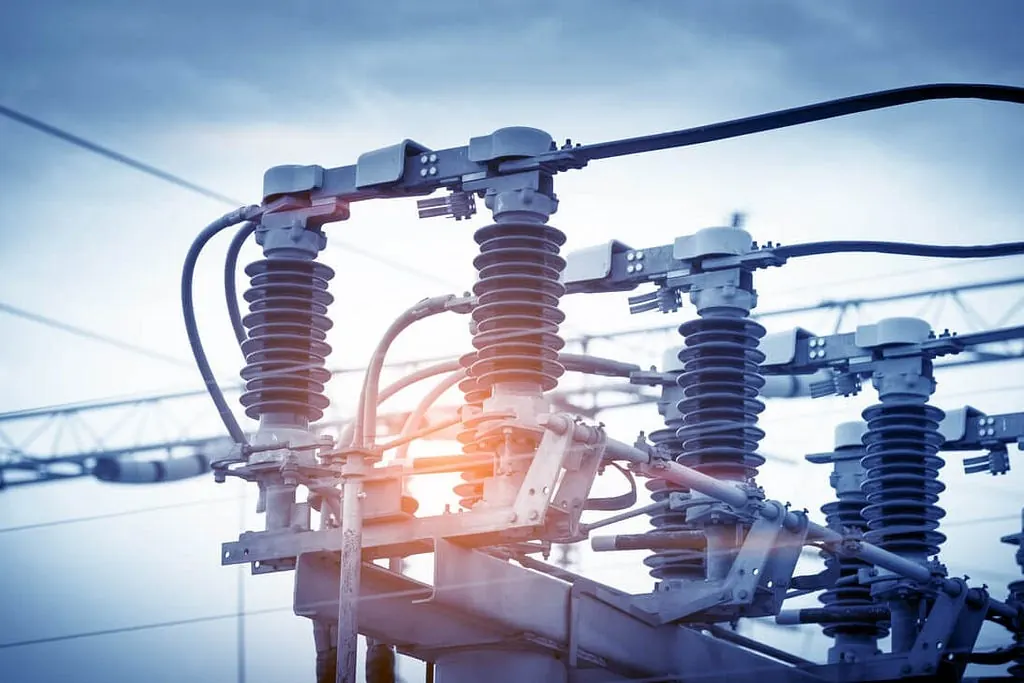
Electrical networks, that is, the transmission and distribution infrastructure, are a multi-layered system that allows it to reach millions of users safely and efficiently from the power plants where electricity is produced.
Across Europe, in the Russian-Ukraine war, there is a production of very different sources, as we are familiar with it when we hear the threat of cutting off the gas. In the West, especially in Portugal and Spain, production is provided by renewable energy sources, 43% of Spain’s electricity is provided by wind and solar power plants. France, on the other hand, produces 60% of energy in nuclear power plants. While thermal power plants that produce electricity with gas purchased from Russia are more common in the eastern bloc, Germany and Italy have both gas and oil-based thermal power plants. Norway, Switzerland and Austria meet their needs with hydroelectric power plants.
In fact, everyone feeds the network at the appropriate rates by producing electricity at every convenient time. While power plants are generally produced between 10 and 30 kV, the voltage is raised to very high values such as 154 kV — 400 kV in substations with transformers. I can only explain this without going into the alternating current theory to minimize energy losses during transmission (because high voltage means low current, which means less heat loss).
The electricity produced and upgraded is transported to the substations around the cities with high voltage lines, and electricity service is provided with various systems depending on the needs of the current regions. These systems are digital control systems used to remotely monitor and control the transmission and distribution lines we know as SCADA (Supervisory Control and Data Acquisition). (which would be nice if I can write an article about the SCADA architecture)
Loading, fault localization, automatic breaker systems are made by these systems at the time of interruption. As I mentioned before, TEIAS in Turkey, ENTSO-E member TSOs in Europe operate these systems. However, even if these systems are very stable and work successfully, the systems may not be able to keep the infrastructure alive with the sudden change of such high loads on the system. Which is exactly what happened in Spain according to estimates.
Electricity is a resource that should be consumed instantly, it is difficult to store. For this reason, production and consumption should be kept in balance every second, which SCADA systems provide.
If this equilibrium cannot be maintained, the frequency decreases, the system becomes unstable and blackout may occur. This is the most serious crisis situation experienced by energy systems.
Electrical systems usually have a malfunction or sudden increase in load (for example, a large power plant is out of operation). As a result, the frequency in the network begins to drop (for example, 50 Hz → 48 Hz). Automatic protection systems load or cut off production so that the frequency does not drop further.
However, if these interventions are not sufficient, the transmission lines are overloaded and disabled. The grid loses synchronous operation, so manufacturers and consumers cannot be “in the same rhythm”. As a result, the increased load causes the frequency to decrease further and the system shuts itself off for safety reasons. As the system on each line, especially on the consumer lines, closes itself, the load accumulated on the entire line increases even more. As a result, this causes a process that goes up to the closure of the entire network.
Rebuilding the network after blackout is a very complex and gradual task. This requires the re-commissioning of some power plants, some to start production from scratch. As a matter of fact, some power plants must be designed to operate without an external power supply (for example, hydroelectric power plants).
These power plants, in turn, trigger other power plants (such as thermal power plants), and the entire system is gradually restarted. The whole process is called the Black Start process. It is a process that can find hours or even days.
Situation of Spain and Portugal
Spain and Portugal provide most of their electricity production from wind and solar energy. While it is noted that renewable energy does not directly cause disruption, it is worth knowing that the grid becomes more sensitive to sudden frequency changes due to the fact that such energy sources have low “system inertia”. The integration of renewable energy sources into the grid creates problems due to the inflexibility of the existing infrastructure. Especially in the periods when wind and solar energy are insufficient, called “Dunkelflaute”, the lack of long-term energy storage capacity reduces grid stability. However, this is a situation that does not support the claims of the sticks who throw their hands on television, such as “sir, renewable energy has led to this”. There is a problem with the infrastructure because it does not depend on the mode of production and Europe’s energy infrastructure is at the center of serious criticism, along with the crises and transformation efforts experienced in recent years.
Much of Europe’s electricity transmission and distribution infrastructure was built in the 1980s. This situation is insufficient in the face of increasing electricity demand and the integration of renewable energy sources. Investments in the European Union’s energy infrastructure are not realized at the required speed and scope. The EU’s “bottom-up” planning system cannot fully cover the necessary infrastructure and cross-border connections. In addition, the energy policies of the European Union are criticized by some member countries as “centralized” and “decentralized”, and many policies and decisions taken face opposition within the countries for this reason. In particular, it is stated that the decisions taken within the scope of the Green Agreement put some countries in a difficult situation economically and disrupt competition.
Europe’s dependence on natural gas and oil from Russia for many years has created a serious weakness in terms of energy security. It is possible to say that the fact that Germany has closed all power plants in the last 10 years while obtaining energy from nuclear power plants in the past has increased the dependence on Russia. Although this dependence was tried to be reduced after the Russia-Ukraine war, the process of transitioning to alternative sources is both time-consuming and costly.
Bright Warning
In fact, it is useful to say the following when finishing. This electricity crisis, which is the current problems in Europe’s energy infrastructure, and perhaps the only proclamation of the existing, perhaps due to these problems, points to a multi-layered crisis that includes not only technical but also economic and political dimensions. In fact, it mirrors potential crises not only for Europe but for the whole world.
To cope with such challenges, investments in the modernization of power grids must be accelerated, alternative energy sources that will reduce foreign dependence must be directed, and long-term energy storage solutions that can balance the discontinuous nature of renewable energy must be developed.
Most important of all, a more just, harmonious and coordinated energy policy should be established within the European Union. Only with these holistic steps can Europe build a sustainable, reliable and crisis-resistant energy future.
It is appreciated that Europe will deal with these problems in a short time because it has those who know how to learn from its mistakes. So how will he do it, it is obvious that we will see this in the coming days.
Until then, I wish you bright days…
- Spain, Portugal and parts of France hit by massive power outage
- Spain and Portugal declare states of emergency after massive power outage | CNN
- Did Renewable Energy Cause Spain & Portugal's Power Cut?
- Power outage - Wikipedia
- Power cuts - everything you need to know | National Grid Group
https://www.energynetworks.org/customers/what-happens-in-an-energy-shortage